Worked scenario
Two-coat coverage example
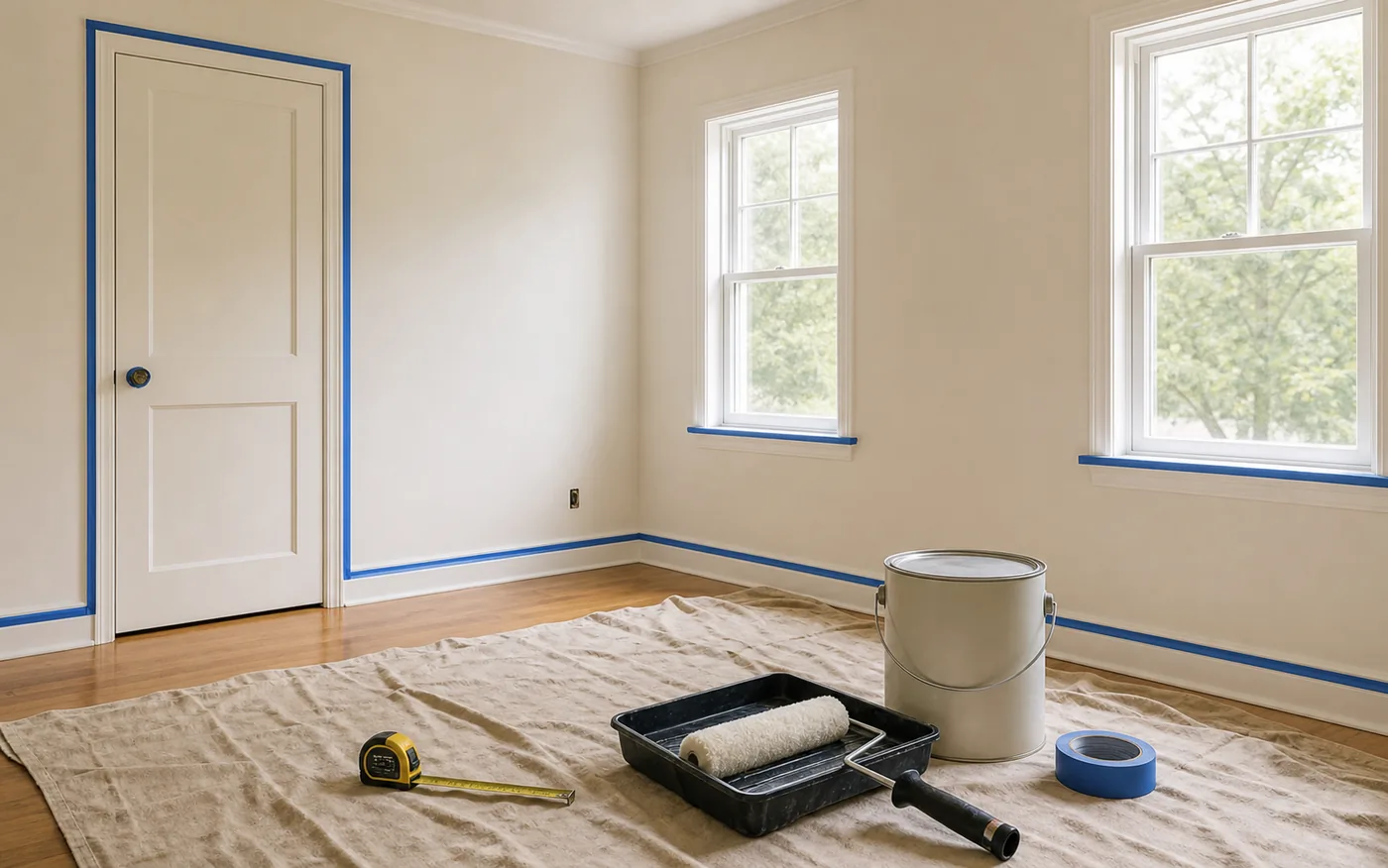
If a room has 301 sq ft of paintable wall area, two coats create 602 sq ft of coated area. With 10% extra, that becomes about 662 sq ft. At 350 sq ft per gallon, buy 2 gallons.
Worksheet
Coverage label worksheet
- Estimate paintable wall area.
- Choose the number of coats.
- Use the product coverage listed on the can or product page.
- Add a waste factor for touch-ups, roller loading, and surface variation.
- Round gallons up only after coats and waste are applied.
Checklist
Coverage assumption checks
- Treating 350 sq ft per gallon as exact for every paint.
- Forgetting primer or color-change needs.
- Ignoring porous, patched, or textured surfaces.
- Rounding gallons before adding waste.
Why coverage varies
Paint can cover differently depending on sheen, color, surface porosity, texture, primer, roller type, and application thickness.
Primer coverage
Primer may have a different coverage value from wall paint. Use the primer label when planning a separate primer purchase.
Measured data and planning inputs
Coverage sensitivity for a 700 sq ft coated area
A coverage range changes the unrounded result even before waste or purchase rounding. The first two rows use the typical range published by Sherwin-Williams; the lower value is an explicit planning stress test for a surface expected to absorb more paint.
| Coverage assumption | Calculation | Unrounded gallons | Evidence |
|---|---|---|---|
| 400 sq ft per gallon | 700 / 400 | 1.75 gal | Primary source Sherwin-Williams Paint Calculator Accessed July 2026 |
| 350 sq ft per gallon | 700 / 350 | 2.00 gal | Primary source Sherwin-Williams Paint Calculator Accessed July 2026 |
| 300 sq ft per gallon | 700 / 300 | 2.33 gal | Planning preset Conservative sensitivity check only; confirm the selected product label. |
Sherwin-Williams describes 350 to 400 sq ft per gallon as typical. Product, substrate, color, and application conditions can differ.
The table stops before rounding to a container size so the effect of the coverage assumption remains visible.
Visual measurement worksheet
Paint area multiplied by coats and adjusted for waste
Three stacked layers show measured paintable area, the coat multiplier, and a final waste adjustment leading to an unrounded gallon estimate.
Contrasting conditions
A harder case: dark-to-light repaint with a patched wall
A small room has 286 sq ft of paintable wall area. The plan calls for two finish coats, while one repaired 48 sq ft wall will receive a separate primer. The chosen finish paint label is entered at 350 sq ft per gallon, with 8% finish-paint waste.
- Finish coated area: 286 sq ft x 2 coats = 572 sq ft.
- Finish area with waste: 572 x 1.08 = 617.76 sq ft.
- Finish paint: 617.76 / 350 = 1.765 gallons before container rounding.
- Primer remains a separate 48 sq ft task and is not added as a third finish coat.
Result: The finish-paint plan rounds up from about 1.77 gallons according to available container sizes. Primer quantity is checked against the primer label separately, preventing two unlike products from sharing one coverage assumption.
Review: This is harder than multiplying every wall by two because the patched wall has a different coating sequence. Writing primer and finish paint on separate lines avoids inflating the finish area or assuming that both products cover at the same rate.
Using coverage ranges without hiding assumptions
Coverage sensitivity matters most near a purchase boundary. At 400 sq ft per gallon, 700 coated square feet appears comfortably below two gallons; at 350, it reaches exactly two before waste. Once waste is added, the rounded choice may change. Rather than selecting a favorable coverage number to reach a smaller purchase, use the exact label for the coating and preserve the unrounded value. That makes it possible to compare a different product without changing the measured wall area or coat plan.
Treat primer, finish paint, ceiling paint, and trim enamel as separate materials even when they cover the same room. They may have different coverage, application, and container sizes. Also distinguish a touch-up reserve from routine application waste: a reserve is intentionally stored for future repair, while waste represents paint lost to trays, rollers, texture, and handling. The calculator can estimate quantity, but it cannot determine adhesion, surface preparation, lead-paint precautions, moisture remediation, or whether a particular coating system is suitable.
Before you buy paint
- Confirm the paintable surface area before choosing gallons.
- Check the paint label for coverage per gallon.
- Count coats separately from primer coats.
- Note porous, patched, textured, or dark-color surfaces.
- Add a practical waste allowance before rounding up gallons.
When the paint calculator is sufficient
A paint calculator is enough when the goal is estimating gallons from known wall area, coats, label coverage, and a reasonable waste allowance.
When coating instructions take priority
Use the paint can or product page for final coverage and primer guidance. Ask a qualified professional when surfaces are damaged, unsafe, unusually porous, or part of regulated remediation.
Checking gallons near a purchase boundary
Treat coverage as an assumption that should be reviewed, not as a fixed rule. A calculator can show how many gallons a coverage value produces, but the product label and wall condition decide whether that value is reasonable for the project.
If the estimate is close to a whole-gallon boundary, check whether buying an extra quart or gallon makes more sense for touch-ups and small mistakes. Paint availability, color matching, and return policies can affect that decision.
For the final pass, write down wall area, coats, coverage per gallon, waste factor, and rounded gallons together. Keeping those numbers in one note makes it easier to compare paint brands without remeasuring the room.
Continue from coverage to a paint order
Last reviewed: July 28, 2026