Paint planning
Paint Calculator
Estimate how much paint you need from room dimensions, wall height, coats, coverage per gallon, doors, windows, waste, and optional cost.
Paint estimate results
- Paintable area
- 301 sq ft
- Total with coats and waste
- 662.2 sq ft
- Gallons needed
- 1.89
- Primer estimate
- 0 gallons
- Estimated cost
- Not set
Saves in this browser only. Do not save sensitive personal or safety-critical project details.
Planning checklist
- Wall paint: 2 gallons
- Painter's tape: suggested
- Roller covers and drop cloth: suggested
Before buying, check
- The exact product label coverage, primer guidance, and coat recommendation.
- Surface texture, patched areas, stains, and strong color changes.
- Extra paint for touch-ups, edges, trim mistakes, and future repairs.
This estimate is usually enough for early paint shopping and brand comparison. It is not enough for damaged surfaces, regulated remediation, contractor quotes, or safety-critical work.
Prefilled values are editable planning examples. Use the product label, package coverage, installer instructions, and your measured layout when they differ from the example default.
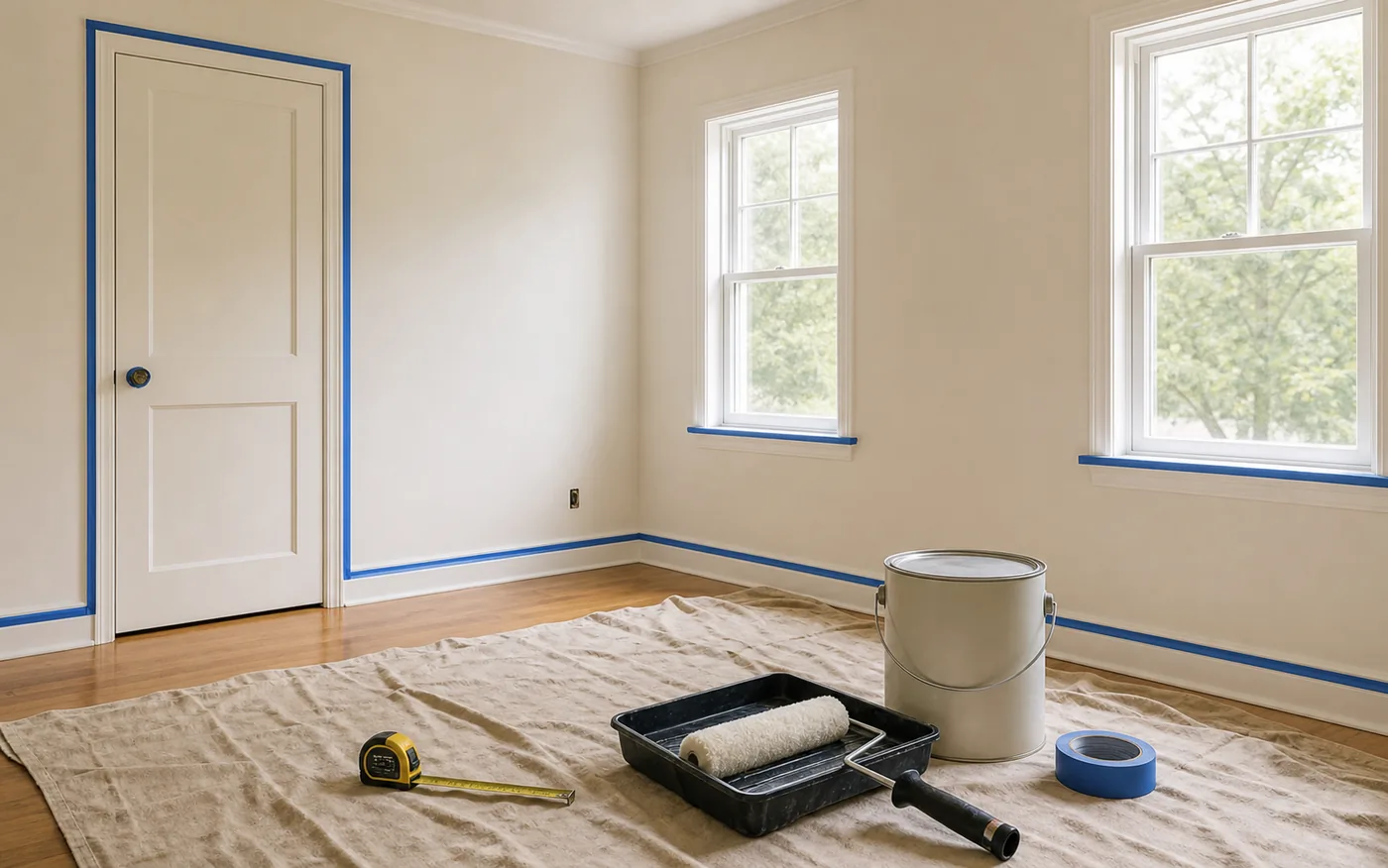
How much paint do you need?
Paint quantity depends on wall area, coats, paint coverage, surface texture, color change, and how much extra you want for touch-ups. This calculator keeps those assumptions visible instead of treating gallons as a guaranteed number.
How much paint does a 5 gallon bucket cover?
A 5 gallon bucket covers about 1,750 to 2,000 sq ft for one coat when the label coverage is 350 to 400 sq ft per gallon. Two coats cut that practical coverage roughly in half, and texture, patched walls, or strong color changes can reduce it further.
Before you buy paint
Use the calculator result as a shopping estimate, then compare it with the specific paint label. Coverage per gallon can change by brand, sheen, surface condition, and whether you are painting a similar color or making a strong color change.
If you are choosing between one large can and several smaller cans, round up only after coats, openings, waste, and primer needs are visible. Keeping the assumptions visible makes it easier to adjust the estimate when product coverage is different from the default value.
Paint coverage formula
Gross wall area = 2 x (Length + Width) x Wall height
Paintable wall area = Gross wall area - Openings
Total with coats = Paintable area x Coats
Gallons = Total with waste / Coverage per gallon
Example calculation
A 12 ft x 10 ft room with 8 ft walls, one door, two windows, two coats, 350 sq ft per gallon coverage, and 10% extra has about 301 sq ft of paintable wall area and about 662 sq ft after coats and waste. That rounds to 2 gallons.
If the paint label says 400 sq ft per gallon instead, the same room still rounds to 2 gallons, but the margin changes. If the walls are patched, textured, or changing from a dark color to a light color, keep the waste factor or primer option visible before reducing the shopping quantity.
How to measure your room
- Measure room length, width, and wall height with one unit system.
- Count large doors and windows that should be deducted from wall area.
- Check the paint label for actual coverage before buying.
- Include ceiling area only when the ceiling is part of the same estimate.
Paint planning checklist
- Confirm the product coverage per gallon from the can or product page.
- Use the wall area calculator first if you already know exact wall sections.
- Keep doors and windows realistic instead of subtracting every tiny fixture.
- Add primer when the surface is bare, patched, stained, or changing color strongly.
- Save the result so you can compare different paint brands or coverage values.
Common paint estimating mistakes
- Forgetting the second coat.
- Using a generic coverage number instead of the product label.
- Rounding too early before coats and waste are applied.
- Ignoring porous, textured, patched, or dark-to-light surfaces.
- Buying no extra paint for touch-ups.
Paint calculator FAQ
How much paint do I need for a 12x10 room?
A 12 ft by 10 ft room with 8 ft walls, one door, two windows, two coats, 350 sq ft per gallon coverage, and 10% waste rounds to about 2 gallons. Change the inputs when wall height, openings, coats, or coverage differ.
How do I use a paint calculator with doors and windows?
Enter the room dimensions and wall height, then count large doors and windows so their area can be deducted before coats, waste, and coverage per gallon are applied.
How many square feet does a gallon of paint cover?
Many interior paints are estimated around 350 to 400 sq ft per gallon, but the product label should be the source for your final coverage value.
Should I include the ceiling?
Include the ceiling only if it will be painted with the same project estimate. Ceiling paint may have different coverage.
How much does 5 gallons of paint cover?
At 350 to 400 sq ft per gallon, 5 gallons can cover about 1,750 to 2,000 sq ft for one coat before surface texture, primer, waste, and color changes are considered.
Should I subtract doors and windows?
Subtract large doors and windows for a cleaner planning estimate, then keep a waste factor for touch-ups and surface variation.
How much extra paint should I buy?
A small waste factor can help with touch-ups, roller loading, texture, and small measuring differences. Product and project conditions still matter.
Can this calculator estimate primer?
Yes, the optional primer estimate uses the same coverage value as a planning shortcut. Primer coverage can differ, so check the label.
Why might my real paint need be higher than the estimate?
Texture, patched walls, strong color changes, porous surfaces, roller loading, and touch-up needs can all increase paint use.
Related calculators and guides
Calculation transparency
Method & Sources
This section documents the calculation boundary, arithmetic, rounding, and editable planning presets used by the Paint Calculator.
What it calculates
- Calculates net wall area, optional ceiling area, coated area, waste allowance, unrounded gallons, whole gallons to buy, optional primer gallons, and optional material cost.
- Uses the coverage-per-gallon value supplied by the user so the estimate can follow the selected paint label instead of a fixed site-wide coverage claim.
What it does not calculate
- It does not diagnose surface condition, decide whether primer is required, predict exact hiding power, or account for application technique and leftover paint in tools.
- It does not estimate trim paint, exterior complexity, labor, lead-paint work, repairs, or contractor pricing.
Formula
- Paintable wall area = perimeter x wall height - entered openings; optional ceiling area = room length x room width.
- Gallons needed = paintable area x coats x (1 + waste factor / 100) / coverage per gallon.
Rounding rules
- Intermediate areas and the unrounded gallon estimate display to two decimals. Purchase gallons and optional primer gallons round up to whole gallons; optional cost uses those rounded purchase quantities.
Why the defaults are planning presets
- Two coats, 350 sq ft per gallon, 10% extra, and the sample door and window sizes are planning presets. Coverage, coat count, primer coverage, and waste must be replaced with product and project values when known.
Sources to check
- Measurement Assumptions & Unit Conversion HomeMeasureKit's shared policy for units, precision, waste factors, package rounding, and estimate limits.
- Paint Coverage Guide Coverage sensitivity, product-label checks, and surface-condition limits.
- Selected paint label or technical data sheet Primary project source for coverage, coat, drying, surface-preparation, and primer instructions.