Interior measurement
Wallpaper Roll Calculator
Estimate wallpaper rolls from wall width, height, roll dimensions, repeat pattern, waste, and optional price while keeping the assumptions visible.
Wallpaper estimate results
- Wall area
- 96 sq ft
- Strips needed
- 8
- Cut length per strip
- 8 ft
- Strips per roll
- 4
- Base rolls
- 2
- Estimated cost
- Not set
Saves in this browser only. Do not save sensitive personal or safety-critical project details.
Planning checklist
- Wallpaper rolls: 3
- Check dye lot or batch guidance before ordering.
- Keep product instructions nearby for final matching rules.
Before buying, check
- Roll width, roll length, pattern repeat, match type, and dye lot rules.
- Wall height changes, alcoves, openings, and small return walls.
- Trimming allowance, pattern matching, mistakes, and spare repair material.
This estimate is usually enough for early roll comparison. It is not enough for wall repair, moisture issues, professional installation layout, or final product ordering without the exact label.
Assumptions used
- 1 wall section is included.
- 10% extra is included for trimming, matching, and mistakes.
Prefilled values are editable planning examples. Use the product label, package coverage, installer instructions, and your measured layout when they differ from the example default.
How this wallpaper calculator works
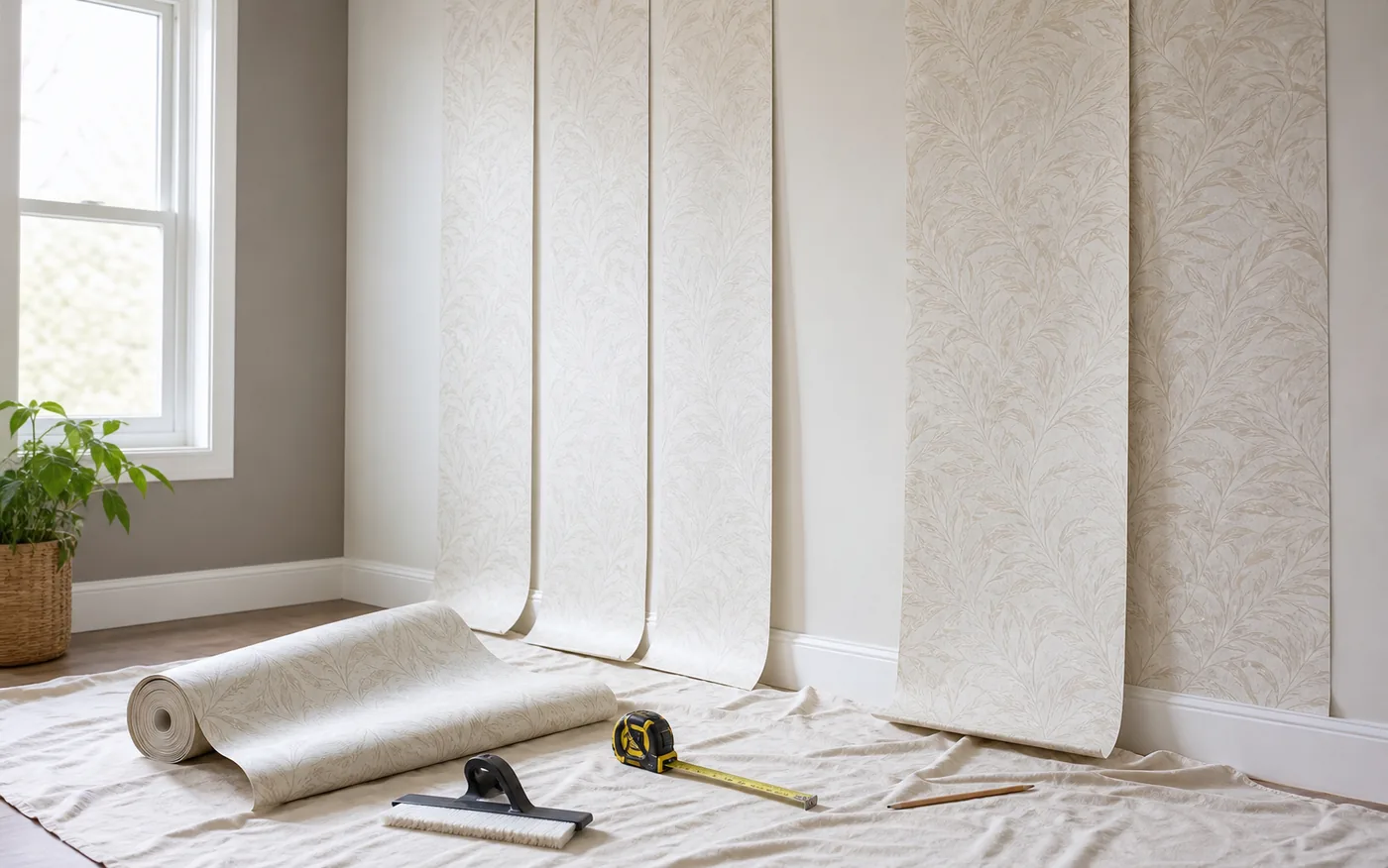
Wallpaper is easier to estimate when the calculator counts full-height strips instead of relying only on wall area. This tool estimates how many strips the wall needs, how many strips each roll can provide, and how many rolls to buy after a waste allowance.
The result is for early shopping and comparison. The exact wallpaper product still matters because roll size, match type, repeat length, batch or dye lot rules, and installation instructions can change the final order quantity.
Wallpaper roll formula
Total wall width = Wall width x Wall sections
Strips needed = Total wall width / Roll width, rounded up
Strip cut length = Wall height rounded up to pattern repeat
Strips per roll = Roll length / Strip cut length, rounded down
Rolls to buy = Base rolls with waste, rounded up
Example calculation
A 12 ft wide wall with 8 ft height and a 20.5 in wide, 396 in long roll needs 8 full strips. With no pattern repeat, each roll can provide 4 full-height strips, so the base estimate is 2 rolls. With 10% extra, the shopping estimate rounds to 3 rolls.
If the same wallpaper has a 20 in repeat, each strip is rounded up to about 8.33 ft before counting strips per roll. That can reduce each roll to 3 strips and increase the shopping estimate.
Before you buy wallpaper
- Check the exact roll width and roll length on the product page or label.
- Use the actual pattern repeat and match type when the wallpaper has a pattern.
- Keep dye lot or batch guidance visible before ordering multiple rolls.
- Do not rely on door and window deductions alone for patterned wallpaper.
- Buy only after reviewing return rules and product installation instructions.
When wall area is not enough
Wall area can make a project look smaller than it is. Wallpaper rolls are cut into vertical strips, so a narrow leftover piece may not be useful on the next full-height strip. Pattern matching can also create offcuts even when the square footage appears sufficient.
Wallpaper planning checklist
- Measure each wall section width and height with one unit system.
- Record roll width, roll length, repeat, and match type from the exact product.
- Use a higher waste factor for large repeats, drop matches, or complex rooms.
- Keep extra material for trimming, mistakes, and future touch-ups when practical.
- Save the result so you can compare plain and patterned wallpaper options.
Common wallpaper estimating mistakes
- Dividing wall area by roll area without checking strip length.
- Ignoring pattern repeat or drop match instructions.
- Mixing inches, feet, meters, and centimeters in one estimate.
- Subtracting every opening before considering pattern alignment.
- Ordering rolls from different batches without checking dye lot guidance.
Wallpaper calculator FAQ
How do I estimate wallpaper rolls?
Measure wall width and height, check roll width and roll length, then estimate full-height strips per roll. Pattern repeat and waste can increase the final roll count.
Should I subtract doors and windows?
For early wallpaper planning, do not subtract every opening too aggressively. Strips still need to align, and openings may not reduce the number of full-height strips you need.
What does pattern repeat change?
Pattern repeat can force each strip to be cut longer than the wall height so the design aligns between strips. Larger repeats can reduce usable strips per roll.
What is a safe wallpaper waste factor?
A 10% planning allowance is a common starting point, but larger repeats, drop matches, difficult rooms, and first-time installation can need more.
Can this replace product instructions?
No. Use this as a shopping estimate, then check the wallpaper label or product page for roll dimensions, match type, batch guidance, adhesive, and installation instructions.
Related calculators and guides
Calculation transparency
Method & Sources
This section documents the calculation boundary, arithmetic, rounding, and editable planning presets used by the Wallpaper Roll Calculator.
What it calculates
- Calculates full-height strips needed across the entered wall sections, the pattern-adjusted strip cut length, strips per roll, rolls to buy, and optional cost.
- Uses roll width, roll length, and repeat supplied by the user rather than treating roll surface area alone as usable wall coverage.
What it does not calculate
- It does not model drop-match offsets, motif placement, wall-by-wall seam positions, unusable remnants, dye lots, or installer technique.
- It does not decide adhesive, primer, wall preparation, or whether doors and windows can safely reduce the order quantity.
Formula
- Strips needed = ceiling(total wall width / roll width). Pattern-adjusted strip length = ceiling(wall height / repeat) x repeat when repeat is greater than zero.
- Strips per roll = floor(roll length / strip cut length); base rolls = ceiling(strips needed / strips per roll); rolls to buy = ceiling(base rolls x (1 + waste factor / 100)).
Rounding rules
- Strip, base-roll, and purchase-roll stages use whole-number floor or ceiling rules because partial strips and rolls cannot complete the next stage. Displayed lengths and areas round to two decimals.
Why the defaults are planning presets
- The sample roll dimensions, repeat, wall count, and 10% extra are planning presets. Replace them with the exact wallcovering label, match type, and room layout.
Sources to check
- Measurement Assumptions & Unit Conversion HomeMeasureKit's shared policy for units, precision, waste factors, package rounding, and estimate limits.
- Wallpaper Roll Guide Strip-based planning, pattern repeat, match type, and batch checks.
- Selected wallcovering label or specification Primary project source for roll width, length, repeat, match type, and installation instructions.